
Industrial Machinery & Manufacturing
Why do industrial manufacturers rely on precision machining service?
In the field of aero engines, if the dimensional deviation of a single turbine blade exceeds 0.001 millimeters, it may cause the entire engine worth tens of millions of dollars to fail at an extreme speed of over 10,000 revolutions per minute. Industrial manufacturers rely on precision machining service precisely because it can stably control the dimensional tolerance of key components within 0.005 millimeters. This near-ultimate precision directly determines the performance limit and safe lifespan of the products. For instance, a first-tier supplier of blades for Boeing and Airbus has reduced the processing error of blade profiles by 70% by adopting five-axis precision machining centers, enabling them to maintain structural integrity even in high-temperature environments exceeding 1,700 degrees Celsius. This has increased engine fuel efficiency by nearly 5% and saved airlines millions of dollars in operating costs annually.
In the manufacturing of medical devices, precision processing is directly related to human life. An artificial knee joint implant needs to achieve a perfect biomechanical match with the patient's bone, and its surface roughness should reach the micrometer level (Ra < 0.8µm) to ensure that bone cells can attach and grow smoothly. A clinical retrospective analysis of over 10,000 surgeries shows that customized implants manufactured by precision processing services can shorten the postoperative recovery period of patients from an average of 12 weeks to 8 weeks and increase the 10-year survival rate from 92% to over 97%. This tailor-made model that combines digital design with non-contact optical scanning has reduced the probability of implant revision surgery by 40%, significantly alleviating the secondary pain and economic burden on patients.
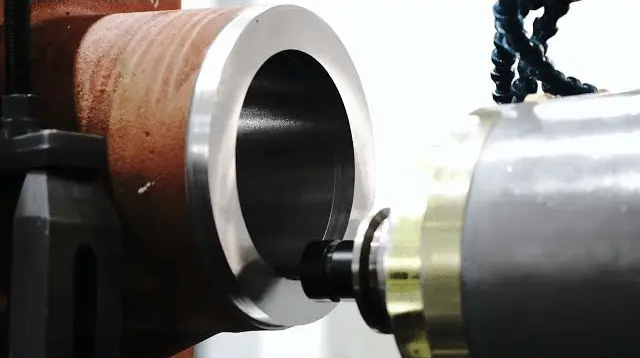 In highly automated automotive production lines, industrial robots need to operate continuously for 24 hours. The lifespan of their core transmission component - the precision reducer - directly determines the operating rate of the entire production line. The reducer inside the joint of a six-axis industrial robot needs to withstand repeated torque impacts of over 10,000 Newton-meters. By adopting precision processing techniques represented by hard turning and grinding, the tooth profile error of key gears is controlled within 3 microns, and the surface hardness after heat treatment is stabilized above HRC60, which significantly extends the design life of the reducer from 6,000 hours to 20,000 hours. This means that for a welding production line with an annual output of 300,000 vehicles, unplanned downtime caused by robot malfunctions can be reduced by 80%, and maintenance costs can be saved by more than 500,000 yuan annually.
Looking at the global supply chain, manufacturers' reliance on precision processing is essentially an ultimate pursuit of risk control and comprehensive benefits. According to an industry analysis report in 2023, in the field of electronic products, entrusting the production of a heat sink shell for a 5G communication base station to a precision processing service provider with ISO 9001 certification, although the processing cost per piece may be 15% higher than that of ordinary suppliers, However, due to its reduction of the product defect rate from 500 parts per million (500 ppm) to less than 10 parts per million (10 ppm), the overall quality cost actually decreased by 30%. This strategic investment in precision, efficiency and reliability has earned the manufacturer a valuable market reputation and continuous orders, which constitutes an indispensable part of its core competitiveness.
In highly automated automotive production lines, industrial robots need to operate continuously for 24 hours. The lifespan of their core transmission component - the precision reducer - directly determines the operating rate of the entire production line. The reducer inside the joint of a six-axis industrial robot needs to withstand repeated torque impacts of over 10,000 Newton-meters. By adopting precision processing techniques represented by hard turning and grinding, the tooth profile error of key gears is controlled within 3 microns, and the surface hardness after heat treatment is stabilized above HRC60, which significantly extends the design life of the reducer from 6,000 hours to 20,000 hours. This means that for a welding production line with an annual output of 300,000 vehicles, unplanned downtime caused by robot malfunctions can be reduced by 80%, and maintenance costs can be saved by more than 500,000 yuan annually.
Looking at the global supply chain, manufacturers' reliance on precision processing is essentially an ultimate pursuit of risk control and comprehensive benefits. According to an industry analysis report in 2023, in the field of electronic products, entrusting the production of a heat sink shell for a 5G communication base station to a precision processing service provider with ISO 9001 certification, although the processing cost per piece may be 15% higher than that of ordinary suppliers, However, due to its reduction of the product defect rate from 500 parts per million (500 ppm) to less than 10 parts per million (10 ppm), the overall quality cost actually decreased by 30%. This strategic investment in precision, efficiency and reliability has earned the manufacturer a valuable market reputation and continuous orders, which constitutes an indispensable part of its core competitiveness.
In highly automated automotive production lines, industrial robots need to operate continuously for 24 hours. The lifespan of their core transmission component - the precision reducer - directly determines the operating rate of the entire production line. The reducer inside the joint of a six-axis industrial robot needs to withstand repeated torque impacts of over 10,000 Newton-meters. By adopting precision processing techniques represented by hard turning and grinding, the tooth profile error of key gears is controlled within 3 microns, and the surface hardness after heat treatment is stabilized above HRC60, which significantly extends the design life of the reducer from 6,000 hours to 20,000 hours. This means that for a welding production line with an annual output of 300,000 vehicles, unplanned downtime caused by robot malfunctions can be reduced by 80%, and maintenance costs can be saved by more than 500,000 yuan annually.
Looking at the global supply chain, manufacturers' reliance on precision processing is essentially an ultimate pursuit of risk control and comprehensive benefits. According to an industry analysis report in 2023, in the field of electronic products, entrusting the production of a heat sink shell for a 5G communication base station to a precision processing service provider with ISO 9001 certification, although the processing cost per piece may be 15% higher than that of ordinary suppliers, However, due to its reduction of the product defect rate from 500 parts per million (500 ppm) to less than 10 parts per million (10 ppm), the overall quality cost actually decreased by 30%. This strategic investment in precision, efficiency and reliability has earned the manufacturer a valuable market reputation and continuous orders, which constitutes an indispensable part of its core competitiveness.