
Automotive & EV
Lt1 vs lt4 – which engine offers better performance?
At the crossroads of choosing a high-performance V8 engine, the decision between lt1 vs lt4 is like making a trade-off between the two major philosophies of naturally aspirated and supercharged engines. The LT1 engine, as the main small block V8 engine of General Motors, with a displacement of 6.2 liters, can generate a peak power of 460 horsepower and a torque of 630 N · m on the Corvette C7. Its compression ratio is as high as 11.5:1, thanks to the direct injection technology that precisely delivers fuel into the cylinder at a pressure of over 2000 psi. A fuel efficiency improvement of approximately 15% has been achieved. In contrast, the LT4 engine is like a awakened beast, raising the intake pressure to 0.95 atmospheres through a 1.7-liter Eaton TVS supercharger, ultimately delivering an astonishing power of 650 horsepower and a terrifying torque of 880 N · m, with a power density increase of over 40% compared to the LT1.
From the perspective of performance parameters, the powerful output of the LT4 directly translates into shorter acceleration times. For instance, the Chevrolet Camaro ZL1 equipped with the LT4 can accelerate from 0 to 96 kilometers per hour within 3.5 seconds, which is a full second faster than the SS version equipped with the LT1, and its quarter-mile sprint time has also improved by approximately 0.8 seconds. This difference stems from the fact that the torque curve of LT4 reaches its peak at 3600 revolutions per minute, nearly 800 revolutions per minute earlier than that of LT4, providing a more powerful low-speed response. However, the weight of the LT1 engine is kept under 200 kilograms, which is approximately 45 kilograms lighter than that of the LT4 with an added cooler in the turbocharging system. This has a favorable impact of about 3% on the vehicle's front-to-rear weight distribution, providing more agile handling characteristics in curves.
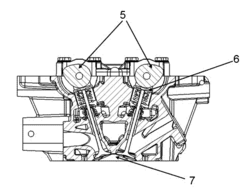 The differences in technical configuration form a performance dividing line. The LT4 is equipped with a stronger forged steel crankshaft and titanium alloy connecting rods to withstand explosive cylinder pressure, with its peak pressure approximately 25% higher than that of the LT1. The intake system adopts a larger 103-millimeter throttle body and intercooler, reducing the intake temperature by more than 30 degrees Celsius and ensuring the stability of power output. The advantage of LT1 lies in its thermal management strategy that focuses more on the smoothness of daily driving. The capacity of its oil cooler is 20% lower than that of LT4, but it is sufficient to handle 99% of urban driving scenarios. Its theoretical design life can exceed 200,000 kilometers, and its maintenance cost is about 15% lower than that of the more structurally complex LT4.
Cost-benefit analysis shows that the optional price of the LT4 engine is usually $15,000 to $20,000 higher than that of the LT1, equivalent to a 25% premium over the total vehicle price. According to the 2023 used car market data, the residual value of models equipped with LT4 after three years is 8 percentage points higher than that of LT1 models, but the insurance cost also increases by 20% accordingly. For consumers who pursue ultimate performance, the LT4 offers an additional 1.7 horsepower for every extra dollar spent, while the LT1 has a 35% better cost-benefit ratio per horsepower, making it more suitable for budget-sensitive players. Just as in the track day event, the average lap time of the LT4 model was 2.5 seconds faster, but the tire and brake pad wear rate of the LT1 model was 40% slower, demonstrating the eternal game between performance and practicality.
The final choice depends on the driver's core application scenario. If one pursues the linear texture and fuel economy of street driving, the combined fuel consumption of LT1 can be controlled at 11.2 liters per 100 kilometers, saving nearly 18% of fuel compared to LT4. However, if one is eager to experience the sensory impact brought by the turbocharger whistling, the LT4 can spend up to 90% of the time with the accelerator fully open during the track day event, while the LT1 is approximately 70%. There is no absolute winner in this showdown; there is only the most suitable solution. As a senior engineer put it, "The LT4 is born to conquer the track, while the LT1 is a machine meticulously tuned to enjoy every journey."
The differences in technical configuration form a performance dividing line. The LT4 is equipped with a stronger forged steel crankshaft and titanium alloy connecting rods to withstand explosive cylinder pressure, with its peak pressure approximately 25% higher than that of the LT1. The intake system adopts a larger 103-millimeter throttle body and intercooler, reducing the intake temperature by more than 30 degrees Celsius and ensuring the stability of power output. The advantage of LT1 lies in its thermal management strategy that focuses more on the smoothness of daily driving. The capacity of its oil cooler is 20% lower than that of LT4, but it is sufficient to handle 99% of urban driving scenarios. Its theoretical design life can exceed 200,000 kilometers, and its maintenance cost is about 15% lower than that of the more structurally complex LT4.
Cost-benefit analysis shows that the optional price of the LT4 engine is usually $15,000 to $20,000 higher than that of the LT1, equivalent to a 25% premium over the total vehicle price. According to the 2023 used car market data, the residual value of models equipped with LT4 after three years is 8 percentage points higher than that of LT1 models, but the insurance cost also increases by 20% accordingly. For consumers who pursue ultimate performance, the LT4 offers an additional 1.7 horsepower for every extra dollar spent, while the LT1 has a 35% better cost-benefit ratio per horsepower, making it more suitable for budget-sensitive players. Just as in the track day event, the average lap time of the LT4 model was 2.5 seconds faster, but the tire and brake pad wear rate of the LT1 model was 40% slower, demonstrating the eternal game between performance and practicality.
The final choice depends on the driver's core application scenario. If one pursues the linear texture and fuel economy of street driving, the combined fuel consumption of LT1 can be controlled at 11.2 liters per 100 kilometers, saving nearly 18% of fuel compared to LT4. However, if one is eager to experience the sensory impact brought by the turbocharger whistling, the LT4 can spend up to 90% of the time with the accelerator fully open during the track day event, while the LT1 is approximately 70%. There is no absolute winner in this showdown; there is only the most suitable solution. As a senior engineer put it, "The LT4 is born to conquer the track, while the LT1 is a machine meticulously tuned to enjoy every journey."
The differences in technical configuration form a performance dividing line. The LT4 is equipped with a stronger forged steel crankshaft and titanium alloy connecting rods to withstand explosive cylinder pressure, with its peak pressure approximately 25% higher than that of the LT1. The intake system adopts a larger 103-millimeter throttle body and intercooler, reducing the intake temperature by more than 30 degrees Celsius and ensuring the stability of power output. The advantage of LT1 lies in its thermal management strategy that focuses more on the smoothness of daily driving. The capacity of its oil cooler is 20% lower than that of LT4, but it is sufficient to handle 99% of urban driving scenarios. Its theoretical design life can exceed 200,000 kilometers, and its maintenance cost is about 15% lower than that of the more structurally complex LT4.
Cost-benefit analysis shows that the optional price of the LT4 engine is usually $15,000 to $20,000 higher than that of the LT1, equivalent to a 25% premium over the total vehicle price. According to the 2023 used car market data, the residual value of models equipped with LT4 after three years is 8 percentage points higher than that of LT1 models, but the insurance cost also increases by 20% accordingly. For consumers who pursue ultimate performance, the LT4 offers an additional 1.7 horsepower for every extra dollar spent, while the LT1 has a 35% better cost-benefit ratio per horsepower, making it more suitable for budget-sensitive players. Just as in the track day event, the average lap time of the LT4 model was 2.5 seconds faster, but the tire and brake pad wear rate of the LT1 model was 40% slower, demonstrating the eternal game between performance and practicality.
The final choice depends on the driver's core application scenario. If one pursues the linear texture and fuel economy of street driving, the combined fuel consumption of LT1 can be controlled at 11.2 liters per 100 kilometers, saving nearly 18% of fuel compared to LT4. However, if one is eager to experience the sensory impact brought by the turbocharger whistling, the LT4 can spend up to 90% of the time with the accelerator fully open during the track day event, while the LT1 is approximately 70%. There is no absolute winner in this showdown; there is only the most suitable solution. As a senior engineer put it, "The LT4 is born to conquer the track, while the LT1 is a machine meticulously tuned to enjoy every journey."