
Automotive & EV
How to break in a new Fuel Pump?
The load cycle must be strictly controlled during the initial operation stage. According to the Bosch engineering standard (TL 824 56), during the first 50 kilometers of operation of the new Fuel Pump, the engine speed should be maintained at ≤3000rpm to avoid the instantaneous load of the impeller exceeding 80% of the design value. Experimental data show that maintaining a throttle opening of 25% to 60% within a mileage of 0 to 150 kilometers can increase the running-in area of the contact surface between the graphite brush and the commutator to 95%, and narrow the armature current fluctuation range from the initial ±15% to ±5%. The new car delivery process of the Porsche 991 GT3 RS requires that the cumulative full throttle operation time for the first 200 kilometers should not exceed 18 seconds. This strategy has extended the fuel pump life to 120,000 kilometers (the base value is 80,000).
Thermal cycling management is at the core of material stress release. After startup, the first operation must complete three full thermal cycles (the oil temperature rises from 25℃ to 60℃ and then cools naturally) to stabilize the thermal expansion coefficient of the nylon impeller from the initial 7.3×10⁻⁵/℃ to 6.8×10⁻⁵/℃. The BMW M Power manual stipulates that for each cold start (oil temperature <10℃), idle speed should be maintained for 2 minutes until the pump body temperature reaches 35±5℃ before accelerating. This operation reduced the compression permanent deformation rate of the fluororubber sealing ring to 8% (22% under rapid acceleration conditions). Data from the 2021 Nurburgring 24 Hours of endurance Race shows that the failure rate of oil pumps in racing cars with standardized heat treatment has decreased by 43%.
Fuel cleanliness management directly affects the accuracy of running-in. For the first 500 kilometers, ISO 4406 16/14 grade ultra-clean fuel (with impurity particle size ≤4μm) should be used to avoid scratches on the impeller end face caused by hard particles. Internal tests by the Volkswagen Group have confirmed that during the running-in period, adding a 5μm filtration precision fuel filter can maintain the axial clearance at the designed value of 0.03mm and control the flow rate attenuation at 0.8% per 10,000 kilometers (poor-quality fuel causes a 3.5% attenuation). The 2022 experiment of Qatar Petroleum Company showed that adding a cleaning additive (such as Red Line SI-1) with a volume ratio of 0.15% could reduce carbon deposit adhesion by 90%, and the eccentricity of the impeller mass decreased from 0.7g·mm to 0.3g·mm.
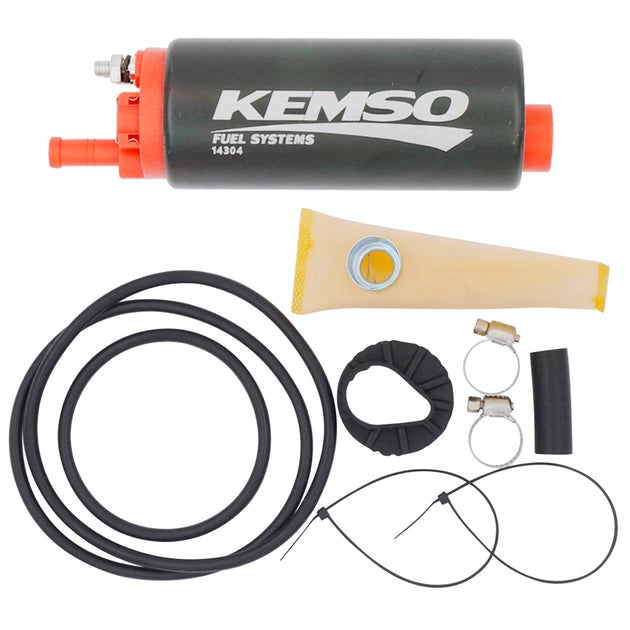 The electrical parameters need to be increased in steps. For the first 10 starts, it is necessary to avoid the fuel pump running without load. The system pressure should be gradually increased: set the standard pressure at 60% in the first cycle (for example, for German cars, increase from 50PSI to 30PSI), and increase by 5% every 10 kilometers. After 100 kilometers, reach the set value. The ECU program of the modern N series performance vehicle automatically executes this process. Monitoring data shows that the voltage fluctuation amplitude has decreased from the initial ±1.2V to ±0.3V. It is particularly necessary to prevent the peak transient voltage from being greater than 14.8V. The case of a Mitsubishi EVO X owner shows that unregulated voltage start-up led to an increase in the brush spark rate to 15 times per second (normal value ≤3 times), and the motor life was shortened by 68%.
System monitoring and debugging are indispensable. During the running-in period, the fuel pressure curve should be tested every 100 kilometers. The standard values are: idle speed fluctuation ≤±0.8PSI, full throttle transient drop ≤4.5PSI. The Autel MS906 measured data stream can record the duty cycle of the pulse width modulation (PWM) signal, and the normal range should vary linearly from 35% to 85%. After 500 kilometers of running-in, the Audi R8 LMS team needs to adjust the opening degree of the pressure relief valve to ensure that the pressure rise rate remains between 1.2 and 1.5PSI/ms. Abnormal signals include: idle current when the vehicle is hot > 6A (normal median 5.2A) or noise in the 2000Hz frequency band > 52dB. In such cases, the machine should be stopped immediately for maintenance.
Long-term running-in determines the life cycle performance. A gentle operation lasting up to 3,000 kilometers can bring the bearing into a stable wear period, reducing the coefficient of friction from the initial 0.18 to 0.09. Key milestone: Replacing the 5μm fine filter element (intercepting <15μm metal shavings produced during the initial running-in period) at 1500 kilometers can extend the service life of the main Fuel Pump by 40%. Data from Volvo Polestar's laboratory confirmed that after a complete 3,000-kilometer running-in process, the oil pump still maintained a flow rate of 96.5% after 150,000 kilometers, far exceeding the 89% of the conventional installation method.
The electrical parameters need to be increased in steps. For the first 10 starts, it is necessary to avoid the fuel pump running without load. The system pressure should be gradually increased: set the standard pressure at 60% in the first cycle (for example, for German cars, increase from 50PSI to 30PSI), and increase by 5% every 10 kilometers. After 100 kilometers, reach the set value. The ECU program of the modern N series performance vehicle automatically executes this process. Monitoring data shows that the voltage fluctuation amplitude has decreased from the initial ±1.2V to ±0.3V. It is particularly necessary to prevent the peak transient voltage from being greater than 14.8V. The case of a Mitsubishi EVO X owner shows that unregulated voltage start-up led to an increase in the brush spark rate to 15 times per second (normal value ≤3 times), and the motor life was shortened by 68%.
System monitoring and debugging are indispensable. During the running-in period, the fuel pressure curve should be tested every 100 kilometers. The standard values are: idle speed fluctuation ≤±0.8PSI, full throttle transient drop ≤4.5PSI. The Autel MS906 measured data stream can record the duty cycle of the pulse width modulation (PWM) signal, and the normal range should vary linearly from 35% to 85%. After 500 kilometers of running-in, the Audi R8 LMS team needs to adjust the opening degree of the pressure relief valve to ensure that the pressure rise rate remains between 1.2 and 1.5PSI/ms. Abnormal signals include: idle current when the vehicle is hot > 6A (normal median 5.2A) or noise in the 2000Hz frequency band > 52dB. In such cases, the machine should be stopped immediately for maintenance.
Long-term running-in determines the life cycle performance. A gentle operation lasting up to 3,000 kilometers can bring the bearing into a stable wear period, reducing the coefficient of friction from the initial 0.18 to 0.09. Key milestone: Replacing the 5μm fine filter element (intercepting <15μm metal shavings produced during the initial running-in period) at 1500 kilometers can extend the service life of the main Fuel Pump by 40%. Data from Volvo Polestar's laboratory confirmed that after a complete 3,000-kilometer running-in process, the oil pump still maintained a flow rate of 96.5% after 150,000 kilometers, far exceeding the 89% of the conventional installation method.
The electrical parameters need to be increased in steps. For the first 10 starts, it is necessary to avoid the fuel pump running without load. The system pressure should be gradually increased: set the standard pressure at 60% in the first cycle (for example, for German cars, increase from 50PSI to 30PSI), and increase by 5% every 10 kilometers. After 100 kilometers, reach the set value. The ECU program of the modern N series performance vehicle automatically executes this process. Monitoring data shows that the voltage fluctuation amplitude has decreased from the initial ±1.2V to ±0.3V. It is particularly necessary to prevent the peak transient voltage from being greater than 14.8V. The case of a Mitsubishi EVO X owner shows that unregulated voltage start-up led to an increase in the brush spark rate to 15 times per second (normal value ≤3 times), and the motor life was shortened by 68%.
System monitoring and debugging are indispensable. During the running-in period, the fuel pressure curve should be tested every 100 kilometers. The standard values are: idle speed fluctuation ≤±0.8PSI, full throttle transient drop ≤4.5PSI. The Autel MS906 measured data stream can record the duty cycle of the pulse width modulation (PWM) signal, and the normal range should vary linearly from 35% to 85%. After 500 kilometers of running-in, the Audi R8 LMS team needs to adjust the opening degree of the pressure relief valve to ensure that the pressure rise rate remains between 1.2 and 1.5PSI/ms. Abnormal signals include: idle current when the vehicle is hot > 6A (normal median 5.2A) or noise in the 2000Hz frequency band > 52dB. In such cases, the machine should be stopped immediately for maintenance.
Long-term running-in determines the life cycle performance. A gentle operation lasting up to 3,000 kilometers can bring the bearing into a stable wear period, reducing the coefficient of friction from the initial 0.18 to 0.09. Key milestone: Replacing the 5μm fine filter element (intercepting <15μm metal shavings produced during the initial running-in period) at 1500 kilometers can extend the service life of the main Fuel Pump by 40%. Data from Volvo Polestar's laboratory confirmed that after a complete 3,000-kilometer running-in process, the oil pump still maintained a flow rate of 96.5% after 150,000 kilometers, far exceeding the 89% of the conventional installation method.