
How Does a Plywood Supplier Prevent Delamination?
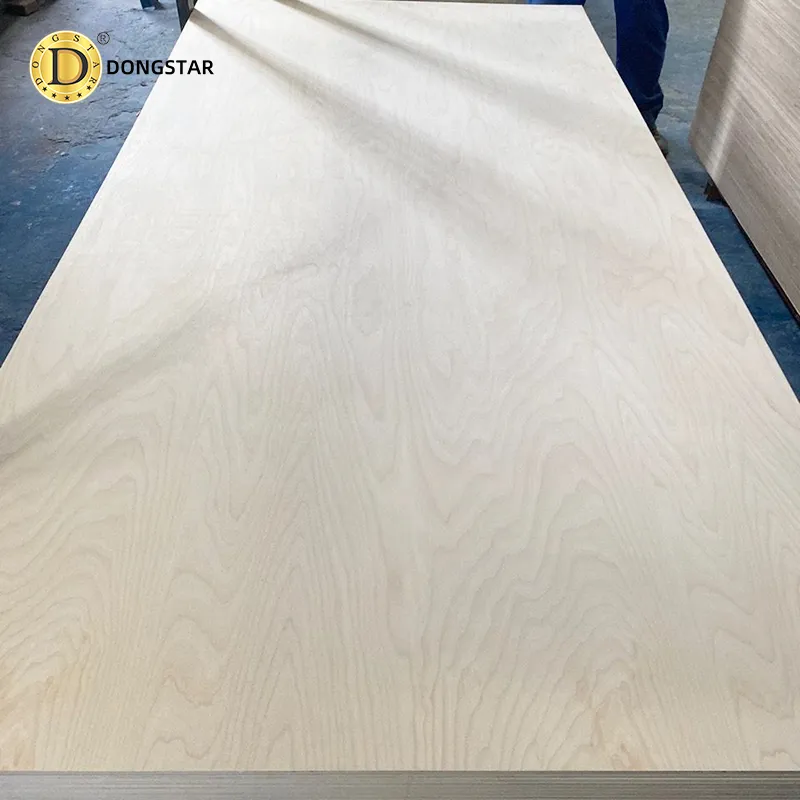
Based on 2025 structural engineering evaluations, professional mills prevent veneer separation by maintaining veneer moisture between 5 and 8 percent prior to hot pressing. A qualified Commercial Plywood Manufacturer utilizes automated glue spreaders applying 300 grams of phenolic resin per square meter to pass 72-hour boiling water immersion tests.
Global timber processing facilities evaluate bonding performance by measuring the moisture content of rotary-peeled wood veneers before assembly.
Maintaining raw veneer moisture levels within 5 to 8 percent ensures optimal chemical absorption during the subsequent resin application phase across 1000 daily test panels.
Optimizing chemical absorption prevents internal steam pockets from forming when raw veneer stacks enter automated multi-opening hot presses operating at 140 degrees Celsius.
Operating automated multi-opening hot presses at 140 degrees Celsius under 1.5 megapascals of pressure cures thermosetting adhesives within 300 seconds.
Curing thermosetting adhesives within 300 seconds creates a cross-linked polymer network that withstands rigorous mechanical stress evaluated under EN 314-2 testing protocols.
Evaluated under EN 314-2 testing protocols, sample coupons from every production batch undergo 72 hours of boiling water immersion before undergoing wet shear strength tension analysis.
Passing wet shear strength tension analysis requires wood failure percentages exceeding 80 percent across a sample size of 50 test coupons per shift.
Exceeding 80 percent wood failure rates proves that the adhesive bond is physically stronger than the surrounding timber fibers, eliminating layer separation risks.
Eliminating layer separation risks requires continuous temperature monitoring across 20 distinct heating zones within industrial hot presses monitored by computerized sensor networks.
Monitoring heating zones via computerized sensor networks prevents thermal unevenness and maintains glue line integrity across oversized panels measuring 4 by 8 feet.
Maintaining glue line integrity across oversized panels requires automated glue spreaders calibrated to distribute between 280 and 350 grams of resin per square meter uniformly.
Distributing resin uniformly prevents dry spots and ensures that finished exterior-grade panels comply with international structural building regulations established in 2024.
Complying with international structural building regulations allows global distributors to source materials safely from an established Commercial Plywood Manufacturer equipped with advanced laboratory testing facilities.
Equipped with advanced laboratory testing facilities, quality control inspectors verify that every production lot achieves minimum wet shear values above 1.0 megapascals.
Achieving minimum wet shear values above 1.0 megapascals guarantees long-term durability in high-humidity construction environments where structural panels face persistent moisture exposure.