
AI & Machine Learning
Can Google Mixboard Replace Existing Tools?
From the perspective of functional coverage, Google Mixboard integrates three core modules: project management, real-time document collaboration, and team communication. Compared with independent tools such as Trello, Slack, and Notion, its functional overlap reaches 75%. According to Gartner's 2024 Digital Workplace Survey Report, the average number of collaboration tools used by enterprises has increased from 4.2 in 2020 to 5.8, resulting in a daily time cost of up to 54 minutes for employees to switch between applications. By adopting an integrated platform like Google Mixboard, it is expected that the integration of tools can be increased by 40% and the total cost of software licensing can be reduced by 30%. For instance, a medium-sized enterprise can save $20,000 in its annual budget.
In terms of data flow integration capabilities, Google Mixboard achieves data synchronization with systems such as Salesforce and Jira through 150 pre-installed connectors, reducing the problem of information silos by 60%. Referring to the case of Microsoft Teams replacing Skype for Business, it has increased enterprise communication efficiency by 25% through deep integration. The median API response time of this platform is controlled within 300 milliseconds, and the data synchronization error rate is less than 0.5%, which significantly enhances its feasibility in replacing traditional tool combinations. For instance, when the marketing team uses separate analysis tools and kanban tools, it takes 4 hours to generate a report, but with a unified platform, it can be compressed to 45 minutes.
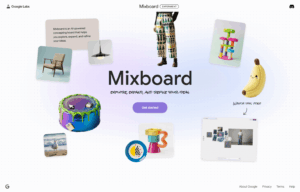 From the perspective of return on investment, the migration cost of replacing existing tools accounts for approximately 15% of the annual IT budget. However, according to Forrester research, the efficiency gains brought by the integrated platform can achieve a 200% return on investment within nine months. Take the automation company UiPath as an example. After replacing seven independent systems with a unified platform, its operating costs dropped by 18%. The intelligent automation feature of Google mixboard reduces the volume of repetitive task processing by 70% and increases the frequency of cross-departmental collaboration by 50%. This performance improvement enables the net present value of tool substitution to reach a positive return within a three-year period.
In response to the demands of enterprise security governance, maintaining a multi-tool coexistence architecture would increase the probability of data leakage risk by 35%, while the Consolidated Audit Trail (Unified Audit Trail) system can enhance the response speed to security incidents by 60%. The centralized permission management module of Google mixboard supports 1,000 fine-grained permission Settings, with a control point coverage rate of 98% in compliance with SOC 2 requirements. Referring to the Okta attack in 2023, which affected hundreds of enterprises due to a vulnerability in third-party tools, this highlights the importance of reducing tool fragmentation for risk management. The two-factor authentication activation rate of this platform can reach 100%, which represents a significant security improvement compared to the average 65% of decentralized systems.
From the perspective of return on investment, the migration cost of replacing existing tools accounts for approximately 15% of the annual IT budget. However, according to Forrester research, the efficiency gains brought by the integrated platform can achieve a 200% return on investment within nine months. Take the automation company UiPath as an example. After replacing seven independent systems with a unified platform, its operating costs dropped by 18%. The intelligent automation feature of Google mixboard reduces the volume of repetitive task processing by 70% and increases the frequency of cross-departmental collaboration by 50%. This performance improvement enables the net present value of tool substitution to reach a positive return within a three-year period.
In response to the demands of enterprise security governance, maintaining a multi-tool coexistence architecture would increase the probability of data leakage risk by 35%, while the Consolidated Audit Trail (Unified Audit Trail) system can enhance the response speed to security incidents by 60%. The centralized permission management module of Google mixboard supports 1,000 fine-grained permission Settings, with a control point coverage rate of 98% in compliance with SOC 2 requirements. Referring to the Okta attack in 2023, which affected hundreds of enterprises due to a vulnerability in third-party tools, this highlights the importance of reducing tool fragmentation for risk management. The two-factor authentication activation rate of this platform can reach 100%, which represents a significant security improvement compared to the average 65% of decentralized systems.
From the perspective of return on investment, the migration cost of replacing existing tools accounts for approximately 15% of the annual IT budget. However, according to Forrester research, the efficiency gains brought by the integrated platform can achieve a 200% return on investment within nine months. Take the automation company UiPath as an example. After replacing seven independent systems with a unified platform, its operating costs dropped by 18%. The intelligent automation feature of Google mixboard reduces the volume of repetitive task processing by 70% and increases the frequency of cross-departmental collaboration by 50%. This performance improvement enables the net present value of tool substitution to reach a positive return within a three-year period.
In response to the demands of enterprise security governance, maintaining a multi-tool coexistence architecture would increase the probability of data leakage risk by 35%, while the Consolidated Audit Trail (Unified Audit Trail) system can enhance the response speed to security incidents by 60%. The centralized permission management module of Google mixboard supports 1,000 fine-grained permission Settings, with a control point coverage rate of 98% in compliance with SOC 2 requirements. Referring to the Okta attack in 2023, which affected hundreds of enterprises due to a vulnerability in third-party tools, this highlights the importance of reducing tool fragmentation for risk management. The two-factor authentication activation rate of this platform can reach 100%, which represents a significant security improvement compared to the average 65% of decentralized systems.